36 Young Performers, 2 weeks, 1 show: Assistant Directing at BYMT
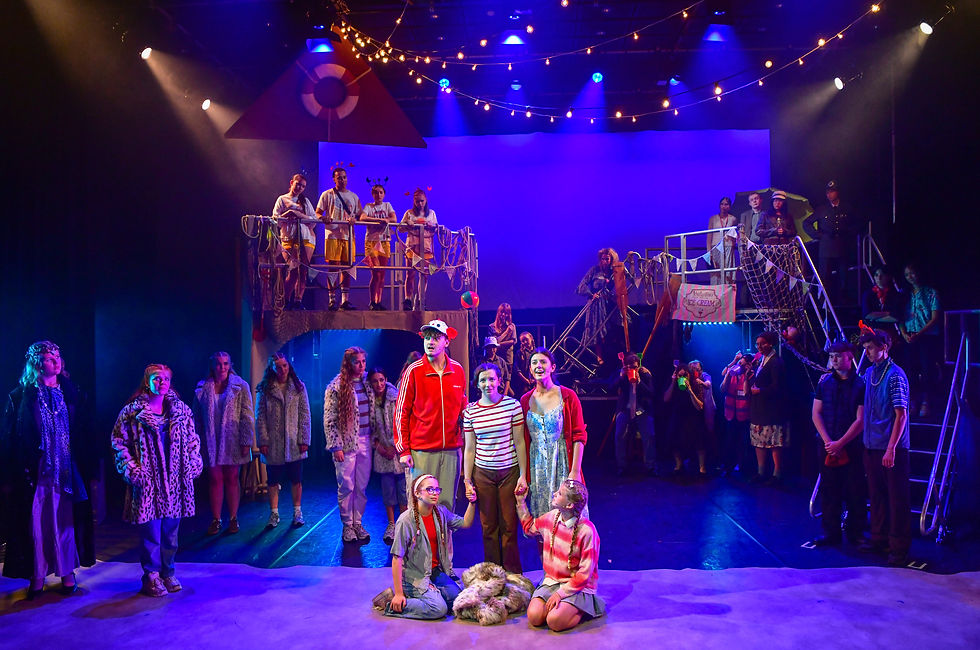
All photo credits to Steven Hadley
My most recent contract saw me in Birmingham, assisting on British Youth Music Theatre's newest production, Sea Change, written by Will Jackson and Elinor Peregrin, and directed by Will Jackson. I could wax lyrical about the show itself. Will and Elinor's writing style blends seamlessly to create a piece of theatre as sublime as it is magical, and the collaborative creative input of the entire team created a show that seemed to sit in a space of suspended time.
In only two weeks of rehearsals, we brought together a company of 36 exceptional young performers to create an entirely new piece of musical theatre. Easy, right? Not quite. And that made it all the more worth it.

I've been fortunate to work with younger performers before, at the Young Actors Company in Cambridge, where I was assistant director to the wonderful Robyn Holdaway, but the set-up was incredibly different. We had a large group of young performers, and we met once a week, all day on a Saturday. We would spend a whole term creating and putting shows together. The Young Performers had time between weekend sessions to learn their lines, to go over blocking, to practice choreography. But at BYMT, we were rehearsing from 9 am to 9 pm every day, and after only 10 days of rehearsal, we had to have a show. We moved into the theatre, and tech started, so there was no time to waste.
Assisting Will Jackson on this show was an absolute masterclass in how to set up a room filled with empathy and care for others, and an immense focus on creation, all the while maintaining an atmosphere of play and discovery throughout.
In our tight rehearsal schedule, there wasn't even time for a read-through, and after casting on day one, we cracked on with music learning (led by the wonderful Sarah Morrison), choreography (created by the magnificent Eleanor Rattenbury) and blocking. This meant throwing out the idea of a Mike Alfred's 3-stream approach to show creation; character work, text work, and world building all had to be integrated into the blocking process, holding space for these conversations while putting the piece on it's feet, every stream slowly coming together like a jigsaw, bit by bit.
What was most impressive, however, were the young performers. And I consciously call them the young performers, as opposed to the kids, or children, we were working with, because above all else it was their professionalism that blew me away. On day one, as a creative team, we looked to set up a rehearsal room full of making big, bold choices, but as anyone who has led a rehearsal room will know, this can only be effectively achieved through a generosity of spirit put forward by an actor's fellow castmates. In working with young performers, at an age when it feels like there's nothing worse than looking silly in front of your peers, what shocked me most was the care and respect these performers aged between 12 and 21, showed each other. They were diligent in learning blocking and practising choreography. They worked with their vocal and dance captains in their limited time off to perfect harmonies and grow confidence. There was never judgement if someone was struggling. If someone was upset, they helped to pick each other up. They weren't afraid to come and ask for clarification.
It seems like such a simple thing to do. But within the arts industry, too often uncertainty is met with frustration (we work on tight timelines and often don't have the time to be reviewing blocking and choreography before first stagger throughs), or, even worse, people find their questions simply brushed off. We teach our performers and collaborators that uncertainty isn't allowed, that longer processing times (something which I experience myself due to my ADHD) are frustrating, and that 'your' question simply isn't important enough. And then we wonder why, when things go wrong in a stagger or run, people didn't come and ask us about a scene prior. It's a nasty paradox we as creatives can find ourselves trapped in, and one of the things I love about AD'ing is being able to be the person performers can come to for clarification.
Getting to take part in building a rehearsal room where questions were celebrated as opposed to shunned was thrilling, and something I will certainly be taking forward into further practice. It seems silly, but somewhere along the way of growing up, questions stopped being encouraged and started being condemned, and as theatre directors, I understand more than ever the importance of creating a rehearsal room that not only encourages discovery and challenging of the text, but that also more explicitly encourages the practical questions, ones that make a room more accessible to all.


Comments