Reflections From the World of Opera.

All Photo Credits: Julian Guidera
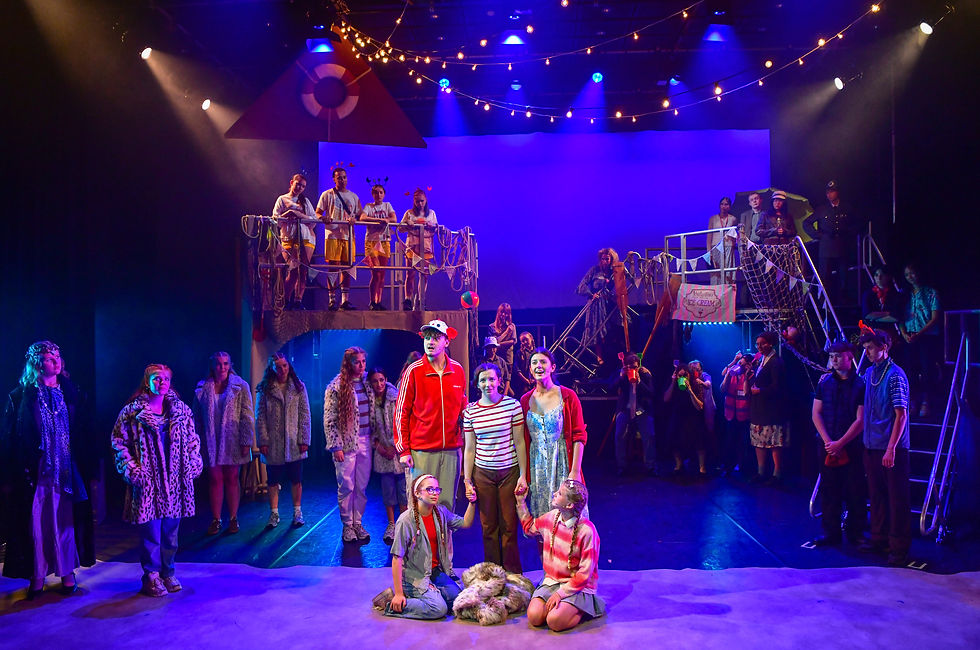
The Elixir of Love | Waterperry Opera Festival | Dir. John Wilkie
I wasn't entirely sure what to expect stepping into my first professional contract on an opera as an assistant director.
I'd just left my MA early to take up the contract, and I was very aware that, over a whole year of learning about directing, we hadn't touched on the world of opera once. Thanks to my time as a choral scholar at undergraduate, I knew how music rehearsals worked, I sight-read well, and having choreographed The Pirates of Penzance at the Minack Theatre, I had a loose understanding of some of the conventions I could expect to bump into across the rehearsal process.

But still, I expected something vastly different from the general rehearsal room environment I'd learnt to cultivate across my MA. Opera, after all, wasn't something I was brought up with. Other than supporting some friends in undergrad productions, I only went to my first opera in November 2025. Opera seemed to exist at a level that was inaccessible. In fact, one of the things that drew me to apply for my role at the Waterperry Opera Festival this summer was that the operas were specifically performed in English translation as a means of making them more accessible. It felt like one less barrier to overcome.
What surprised me most about the entire process was actually how familiar it felt. John Wilkie's rehearsal room was filled with warmth, generosity, and collaborative discovery. Working with a cast of incredibly talented singers, with an equally skilled creative team, it became quickly apparent that the same conversations, ones of intention, actions, and character, underpinned the whole process of creation. I was having the same conversations with Matt McKinney and Madeline Robinson about motivation and 'wants' as I would expect to have with an actor playing Prior Walter or Ophelia.

As a 'musically-informed' director, it was thrilling to see the way John worked from a score, aligning beats and moments of realisation with the musical structure of the piece. For the longest time as a director, I've thought how much more sense it would make when working on a musical to direct from the score instead of the lib, and learning from John how he goes about this was really exciting, and something I then immediately got to put into practice when directing my own opera scenes for the Young Artists Gala (but that'll be in another blog post). As an academic, I focused both my undergraduate and master's dissertations on Stephen Sondheim's works and the integration of musicology into rehearsal room practice, allowing the score as much as the text to inform an actor's performance, but, in the world of musical theatre, other academics have shut this idea down. The reality of practicalities in budget and rehearsal time was thrown back at me as a rebuff, and it was so revitalising to see the same approach refined through experience and put into practice in John's room in a way that truly served the final product.
It is the feeling of familiarity that I keep coming back to when reflecting on my time on The Elixir of Love. I, like many other directors, or even arts enthusiasts, had told myself opera was a world that didn't have a space for me as a creative. I'm so delighted to know I was wrong. Jokes, of course, were made: 'I know it feels a little musical theatre, but...'. What I've learnt most of all is how alike these art forms are. After all, the primary goal of both is to tell a story, and to utilise music as a tool of doing so. The (understandable) misconception I held about opera being too posh or refined for me to work in was built in part from fear of stepping outside of my creative comfort zone, and in part from the lack of access I'd had to it previously. In stepping outside of my comfort zone as a creative, I've gained access to a whole new world of stories to tell and ways to tell them, and I cannot wait to continue developing and learning as a director working in opera.

There is, of course, a lot more that I learnt across the six-week process, and I'm especially looking forward to putting it into practice as we head back into the rehearsal room for another run of the production, this time over two weeks at Wilton's Music Hall in London.
Oh, and if anyone happens to be staging a production of Jonathan Dove's Flight (my newest operatic obsession) and needs an assistant, do get in touch...

Comments